🥘 1 pan | 🍽 Serves 4 | ⏱ 25 mins 🛒 12 ingredients | £1.50pp
Kielbasa is the generic name for any Polish meat filled sausage and is available in most Polish supermarkets.
The smoky flavour of the sausage and addition of gnocchi makes this a delicious and hearty soup. Ready in less than half an hour, it freezes well in the very unlikely event there are any leftovers.
Ingredients:
2 tbsp olive oil
1 large carrot, chopped
1 medium size onion, chopped
2 sticks celery, chopped
1 small red pepper, chopped
6 mushrooms, chopped
2 low salt vegetable stock cubes to make 500ml stock
1 tin cannellini beans
1 tin tomatoes
1/4 Polish sausage, chopped
1/2 packet gnocchi
Chopped parsley
Step by step:
Sauté the chopped vegetables in the olive oil, approx 5 minutes
Add the tomatoes, stock and sausage. Bring to the boil and simmer for 15-20 minutes, until the vegetables are cooked
Add the gnocchi which will thicken the soup and cook for another 3-5 minutes
Notes:
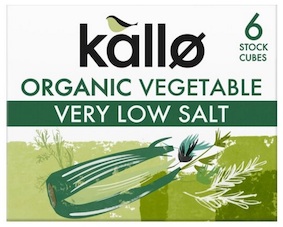
We use Kallo® organic vegetable very low salt stock cubes.
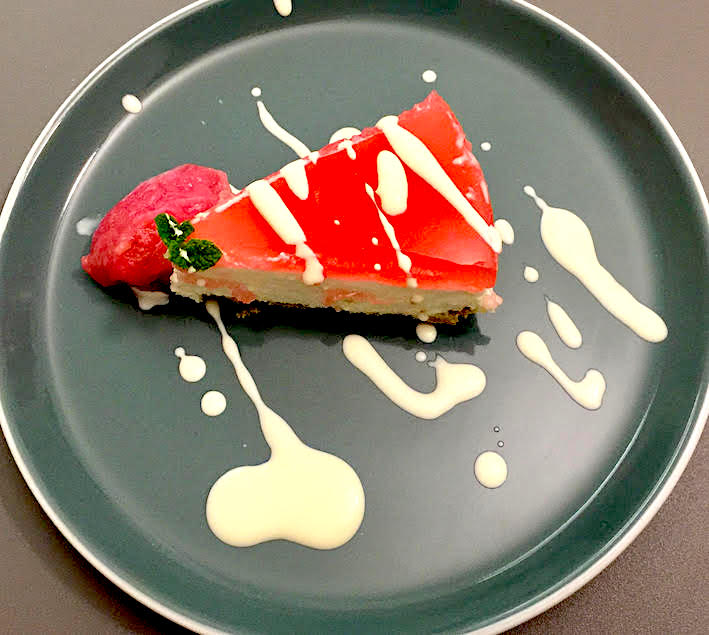
This attractive cheesecake is ideal for a dinner party dessert. Serve with stewed rhubarb pulp.
Equipment needed:
A loose bottomed 20cm round cake tin and a food processor
Ingredients:
FOR THE BASE
flavourless oil, to grease
200g digestive biscuits
75g butter, melted
FOR THE CHEESECAKE
4 sheets of leaf gelatine
juice and zest of 2 lemons
500g mascarpone
2 x 180g packs full-fat soft cheese (we used Philadelphia)
100g caster sugar
FOR THE RHUBARB JELLY
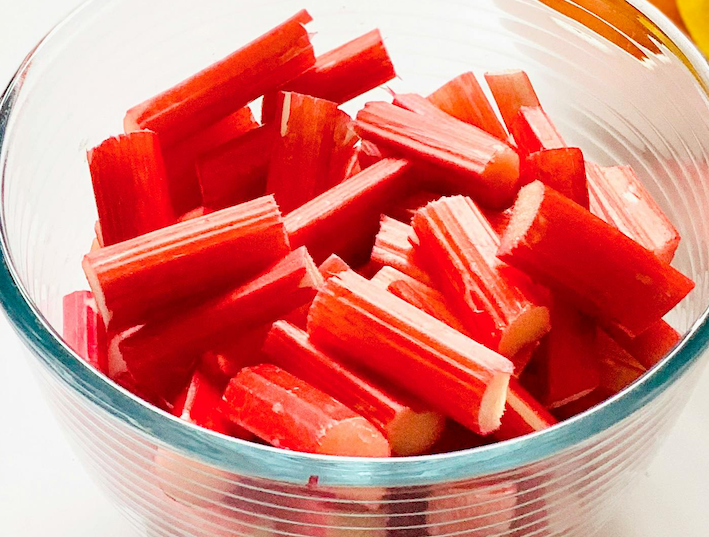
400g rhubarb, chopped
125g caster sugar
4 sheets of leaf gelatine
Line the base of the cake tin and brush the sides lightly with oil.
For the base, blitz the biscuits into crumbs in a food processor, combine them with the melted butter and stir well so all the crumbs are coated in the butter. Press into the base of the tin in an even layer. Chill in the fridge while you make the filling.
For the cheesecake layer, soften the gelatine in a bowl of cold water for 5 minutes. Put the lemon juice in a pan and heat until just simmering. Remove from the heat. Squeeze out any excess liquid from the gelatine, then add it to the lemon juice. Stir until dissolved, then set aside to cool for 5 minutes.
Put the mascarpone, soft cheese, sugar and lemon zest in a large bowl and whisk together. Add the lemon and gelatine mixture and continue to whisk until fully incorporated. Pour into the tin and smooth the top, making sure that it’s as level as you can make it. Chill in the fridge for a minimum of 2 hours or until set firm.
To make the jelly, put the rhubarb and sugar in a saucepan. Heat gently until the sugar has dissolved, then bring to a simmer for 8-10 minutes, or until the rhubarb is very soft. Meanwhile, soak the gelatine leaves in cold water for 5 minutes until soft.
Press the rhubarb through a sieve, catching the juice in a jug underneath, then set the rhubarb pulp aside. Add the gelatine to the hot rhubarb liquid and stir until dissolved. Set aside to cool to room temperature, then pour the jelly over the top of the cheesecake. Cover and chill for at least 4-6 hours, or overnight if possible, to set firmly.
To serve, remove the cheesecake from the tin and slice into 8 slices.
🥘 1 pan and 2 mixing bowls 🍽 Serves 12 🛒 4 ⏱ 30 mins £8 (V) (LF) (LS)
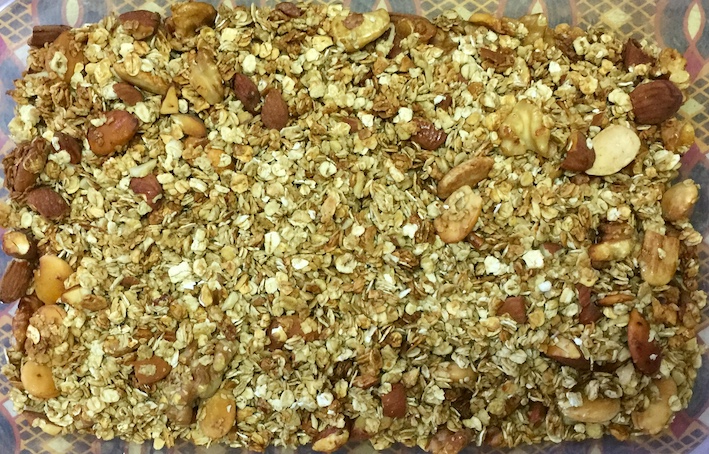
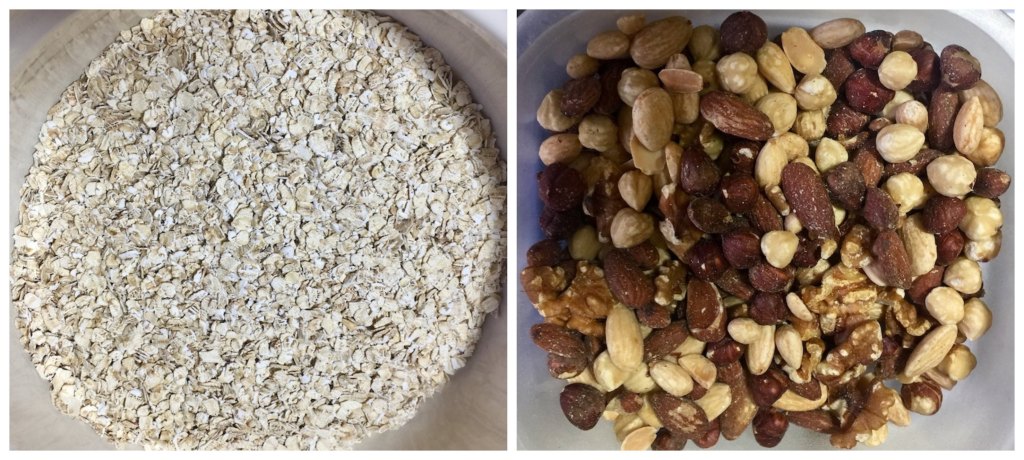
Nothing quite beats the taste of homemade granola and once you get used to making your own, shop bought will never taste as good again. Use nuts of your choice, we use Sainsbury’s So Organic mixed nuts. Not the cheapest option, but they give great results.
Ingredients:
350g oats
300g mixed nuts
120g light butter
100g honey
Step by step:
1 Set your oven to 160C (140C fan), gas 3.
2 Stir and mix together the oats and nuts in a large bowl.
3 Melt the butter and honey, and stir well to combine. We do this in the microwave for convenience, otherwise use a saucepan over a medium low heat.
4 Tip the butter and honey mixture into the bowl of oats and nuts. Stir well so the granola mix is well coated with the butter and honey.
5 Spread the granola mix on a baking tray and place on a low shelf in the pre-heated oven. Keep checking the mixture every 10 minutes and keep turning the mixture so it cooks evenly.
Cook your burgers on the grill and pop your Spanish style grains either in the microwave or in a pan on the stove.
Rustle up a salad and dressing or boil some peas.
Notes:
Rooster chicken burgers contain fewer nasties than many other processed foods and are a good quick on-the-go meal. They are low fat and a little salty, so you only need a good grind of black pepper for seasoning.
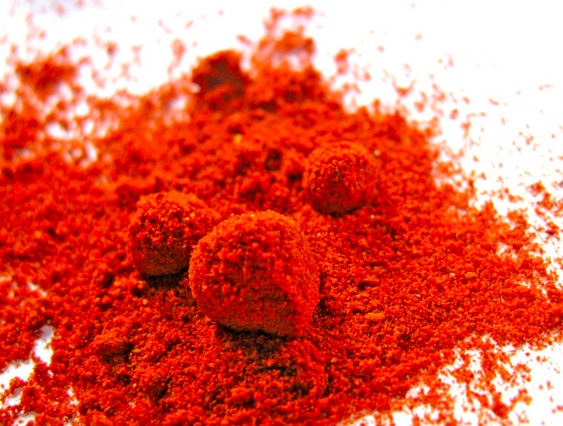
The Spanish style grains are a nice blend of whole long grain rice, and black rice, spiced with chilli flakes, smoked paprika and yeast extract.
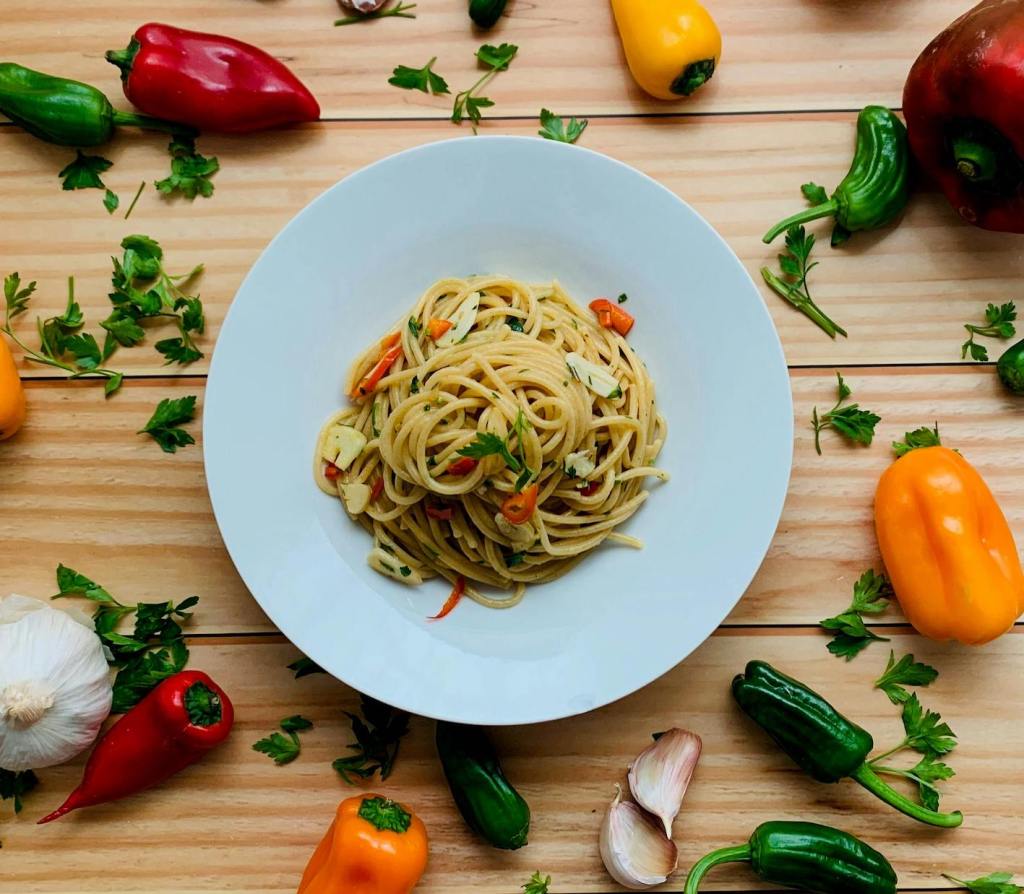
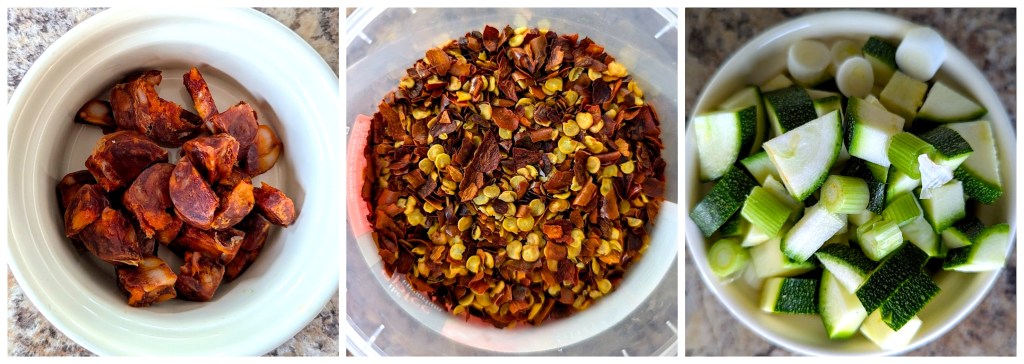
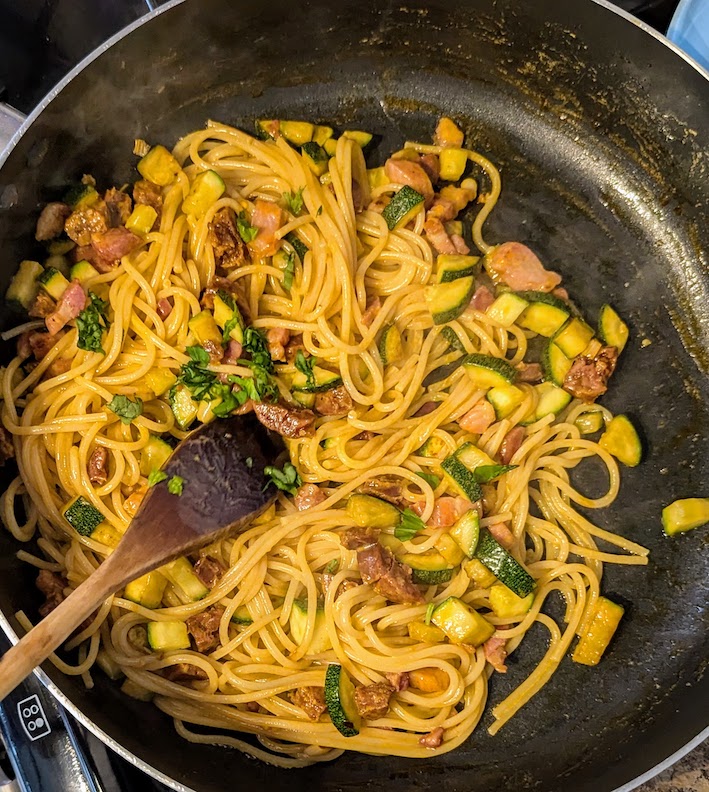
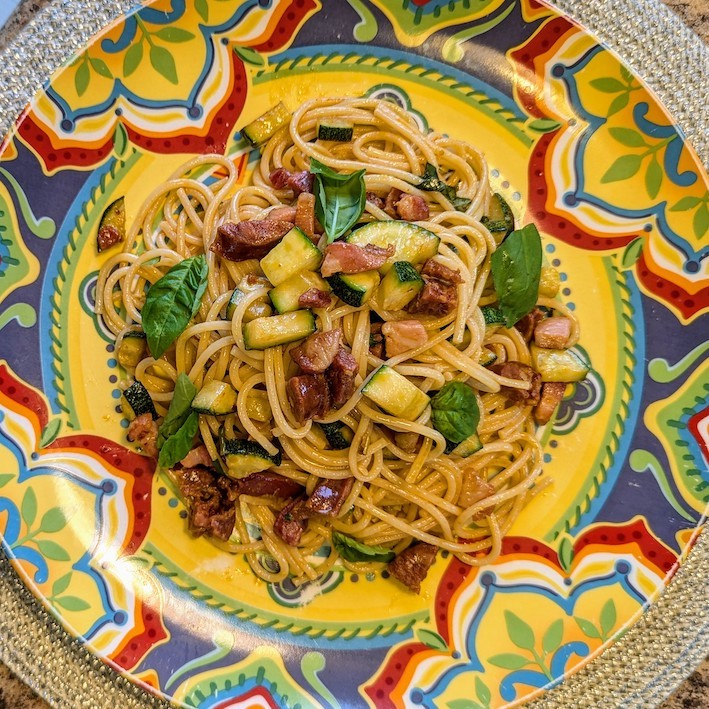
Chorizo, courgettes and chillies added to a basic carbonara make a delicious, quick and easy lunch or weeknight supper. Quartering and slicing your courgette and finely slicing the spring onions gives an attractive finish.
Get your ingredients ready while the spaghetti is cooking
Ingredients:
150g spaghetti
50g lardons
50g chorizo, chopped
1 medium size courgette, chopped
2 spring onions, chopped
1 small chilli, chopped (optional)
50ml single cream (optional)
1 pinch chilli flakes
1 lemon, zested and juiced
basil, a good handful
Step by step:
Step 1
Put your spaghetti on to cook as per the pack instructions, minus about one minute than stated cooking time.
Step 2
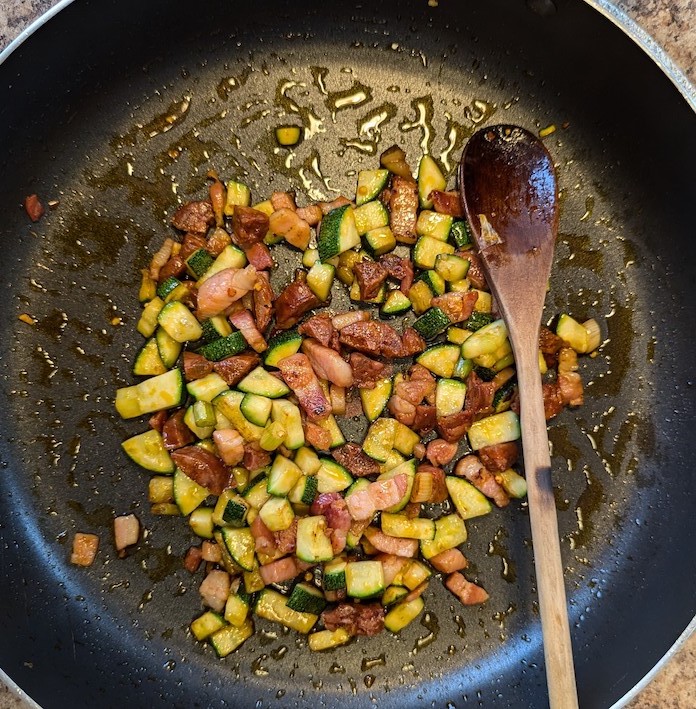
Prepare your ingredients and cook off the lardons, chorizo for a couple of minutes until they are nice and crispy. Add the courgette and chilli. After approximately 5 minutes, turn the heat down.
Step 3
Add your spaghetti to the pan, using tongs and stir in a little cream and cook for about a minute on the low heat. Add a splash or two of the pasta cooking water if needed. If you want more of a classic carbonara flavour, add a beaten egg with some grated parmesan to the sauce.
Step 4
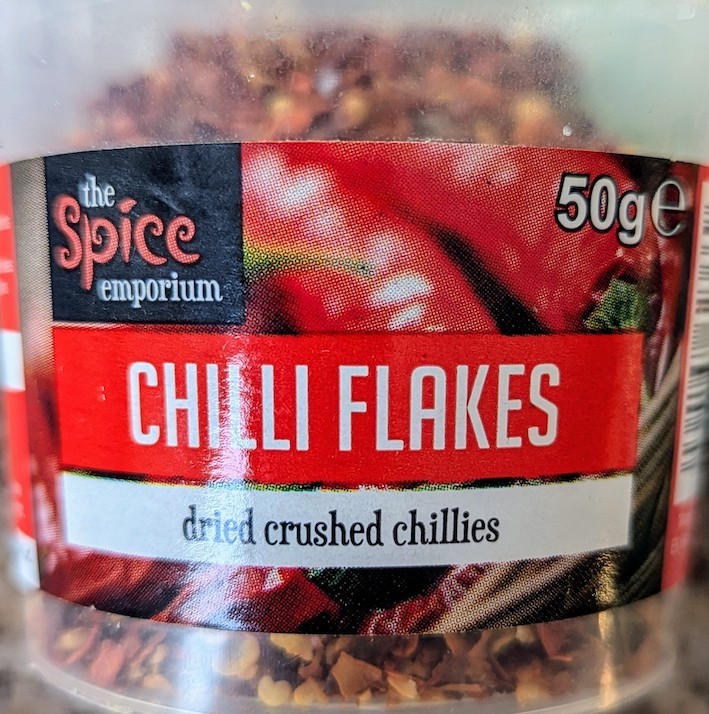
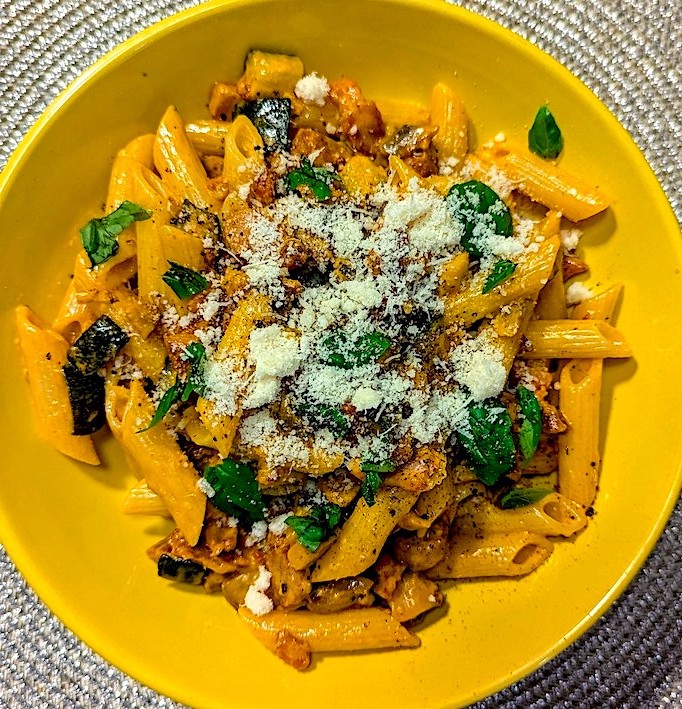
We have used a thin spaghetti and made a light creamy sauce, Penne also works well. Chilli flakes are always a favourite store cupboard item.
Stir the spaghetti through the other ingredients in the pan and check the pasta is done. Serve with the basil scattered over and a bowl of grated parmesan to the side. A squeeze of lemon juice is always welcome.
Store cupboard essential
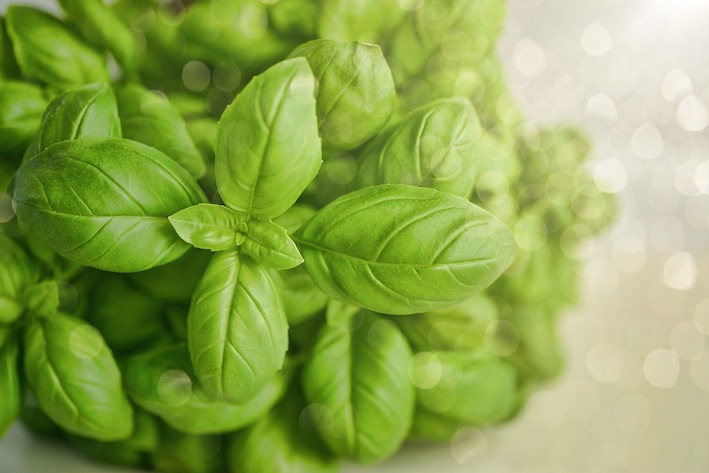
We use a generous handful of Basil
Using Penne, the pasta soaks up all the sauce and a good grating of parmesan on top to serve.
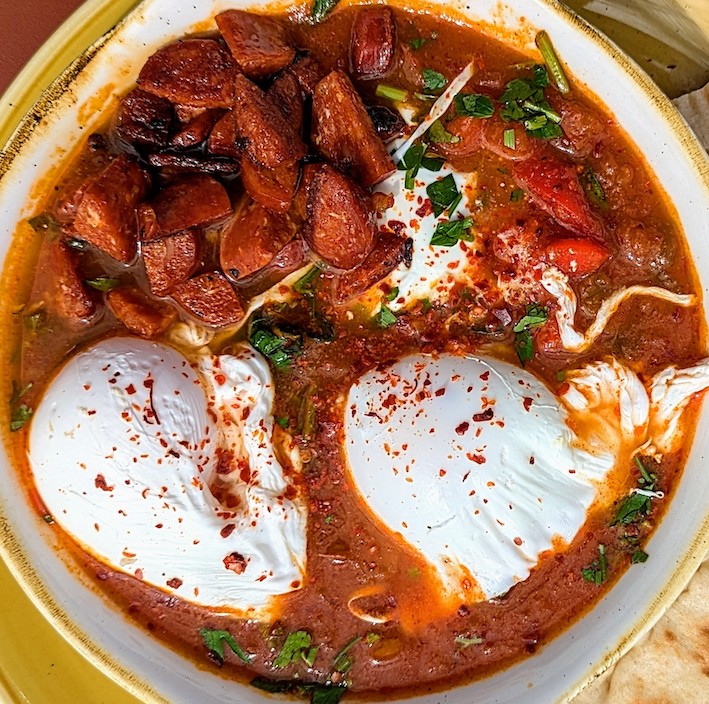
Shakshuka originates from North Africa and the Middle East and the name comes from the Arabic word meaning “mixed” or “shaken up”. Originally a vegetarian dish, it is often cooked with chorizo or merguez sausage.
You can vary the colour of shakshuka, simply by changing the ingredients. Make it green using green peppers and chillies and chopped spinach. Yellow peppers and chopped butternut squash will give you a nice orange colour.
Ingredients:
Extra virgin olive oil
1 large red onion, chopped
100g chorizo, sliced
2 roasted red peppers from a jar
1 garlic clove, minced or chopped
a good handful of coriander, chopped
1 tsp cumin
1 tsp sweet smoked paprika
1 birds eye chilli, chopped or chilli flakes or cayenne pepper (optional)
Tomato sauce
4 fresh tomatoes
4 large eggs
chopped parsley and mint to garnish
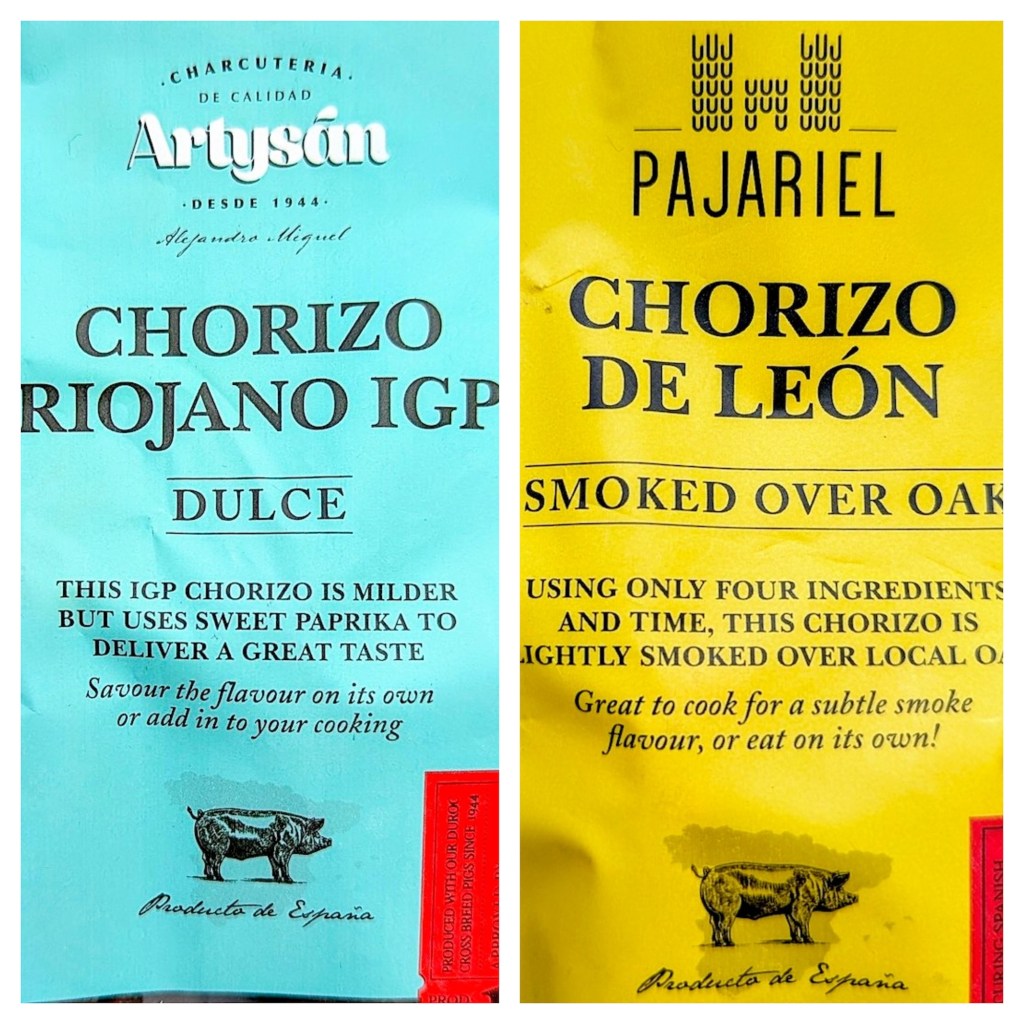
Chorizo comes in a variety of flavours
Step by step:
Make the shakshuka sauce...
Step 1.
In a large lidded pan, sautee the chopped onions and chorizo and cook for 4-5 minutes.
Add the peppers and garlic with a splash of extra virgin olive oil. Season with salt, coriander, paprika, cumin and chopped chilli, or chilli flakes (if using) and cook for another 4-5 minutes, stirring occasionally.
Chop or mince your garlic to vary the flavour
Step 2.
Add the tomatoes and a good glug of tomato sauce. Bring to a boil, cover and leave to simmer for about 15 mins. Uncover and continue cooking until the sauce has thickened.
When the sauce is ready, add the eggs...
Step 3.
We added poached eggs separately on this occasion. Normally, we just make wells in the sauce and crack in the eggs.
Serve the dish in the pan garnished with the parsley and mint. Some crusty baguette is great for mopping up the sauce.
Tips and variations:
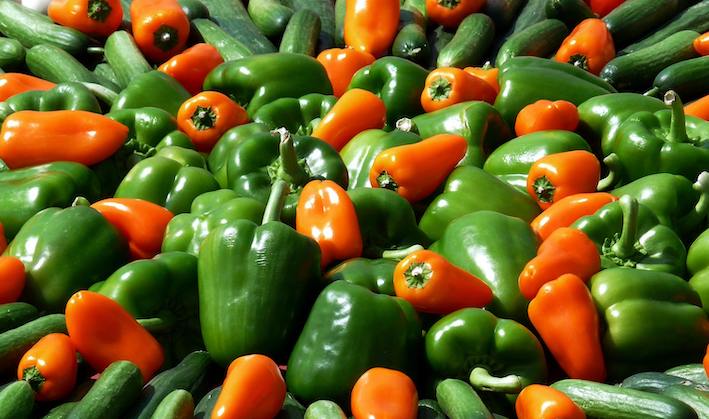
Use fresh peppers if you prefer
Chopped spinach goes well, added after 10 mins of cooking
Mince your garlic for a milder flavour
Add a drizzle of tahini when serving for extra flavour.
Use a sweet paprika – Tesco have a great one for £1
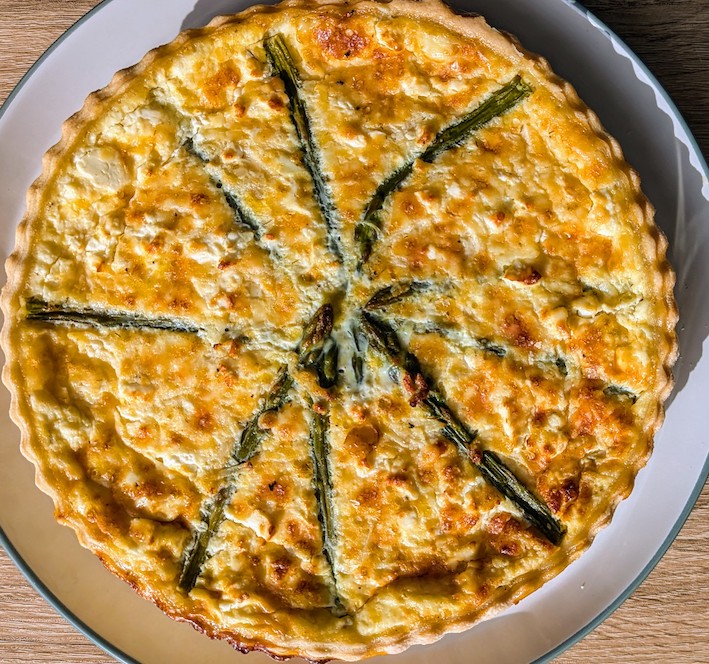
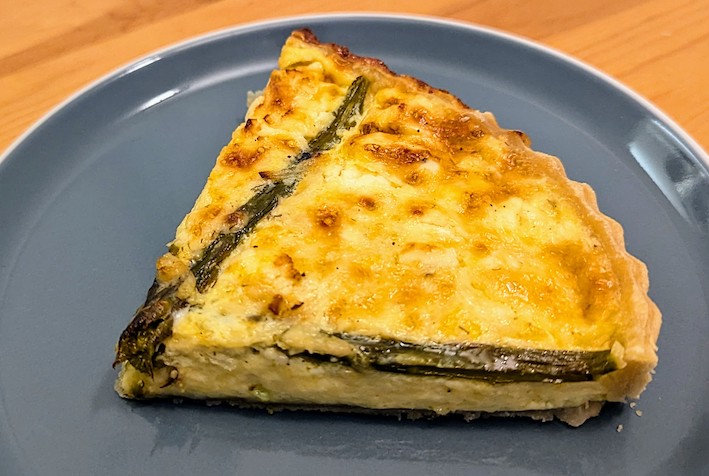
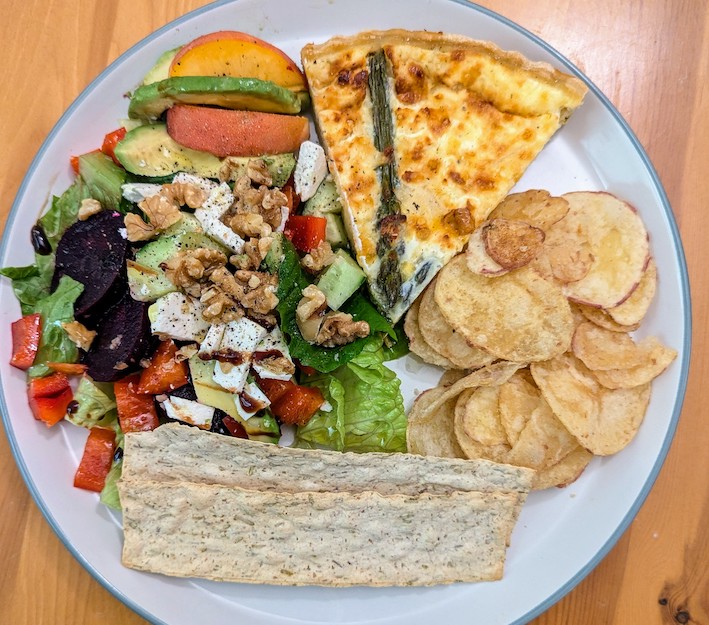
Seasonal asparagus with a nutty brown butter pastry crust, punchy capers and gruyère – perfect for lunch or tea time snack.
Ingredients:
250g asparagus, trimmed
2 eggs
2 egg yolks
250ml double cream
1 lemon, zested and segmented
50g gruyère, finely grated
2 tbsp capers, drained
Brown butter pastry:
225g plain flour
150g butter
1 egg
Step by step:
First – make your pastry
Heat the butter in a small frying pan, swirling frequently, until foaming. Cook for 1-2 minutes until it starts to turn brown and smell nutty. Transfer to a bowl to cool. When it is cool, transfer to the fridge to chill and turn solid. Once cold, cut into cubes.
Whizz the flour and brown butter in a food processor until it looks like damp sand, then add the yolk and 1-2 tbsp of ice-cold water to bring it together. Wrap and chill for 30 mins.
Now make the filling
Steam the asparagus for 3 minutes, then rinse under cold water and pat dry with kitchen paper. Keep 6-8 of the best spears whole, and chop the remainder into 1cm pieces.
Heat your oven to 200C / 180C fan / Gas 6. Roll out the pastry to 2-3 millimetre thick and use it to line a 23cm tart tin. Prick the base all over with a fork. Fill with a piece of baking paper and baking beans. Cook for 15 minutes, then remove the paper and cook for another 5 minutes until the base looks dry.
Meanwhile, whisk together the eggs, egg yolks, cream, lemon zest and cheese with some seasoning.
Trim the pastry case and place the chopped asparagus over the base. Scatter over the capers and pour over the egg mixture. Arrange the remaining asparagus spears on top and cook in the oven for 35-40 mins or until set but still with a slight wobble to the middle. Serve at room temperature or cold.
Tips
We roll the pastry to just 2-3 millimetre thickness which makes a nice texture and helps ensure you don’t get a soggy bottom
Steaming the asparagus retains more of the nutrients and flavour. M&S have an excellent quality steamer for £55.
Bart Ingredients and Chilli Kitchens are running a competition where one lucky person will win a brand new kitchen. Runners up prizes include Barts herbs and spices, Mr Organic products, Tilda rice and utensils from Denby.
The closing date for entries is 31st December 2024 so there is plenty of time to get your entry in!
Our neighbour has a huge garden and every year she shares boxes of fruit which we make into salads and enjoy with a glass (or two) of chilled cava.
Ingredients:
3 Nectarines or peaches
3 Tomatoes
Salt & Black Pepper
Basil – a large handful
Chopped pistachios
Vinaigrette – preferably homemade
200g feta cheese
Balsamic glaze
For your vinaigrette:
extra virgin olive oil
red wine vinegar
fresh lemon juice
maple syrup
sea salt and black pepper
In a small bowl, whisk together all the ingredients, taste and adjust the seasoning to taste.
Use any ripe tomatoes
For your salad:
Cut your nectarines or peaches into thin slices.
Slice the tomatoes and finely chop the pistachios. Tear some of the basil leaves into smaller pieces, saving some whole leaves for garnish.
Make your vinaigrette (see above)
In a large bowl, combine the sliced nectarines or peaches, halved tomatoes, crumbled feta cheese, pistachios and basil leaves.
Pour the vinaigrette over the salad and gently toss everything together until well coated.
Serve the salad immediately or let it chill in the fridge for about 15-20 minutes before serving.
Sprinkle a little extra feta and some more fresh basil on top before serving. Add a few drops of Balsamic glaze for a lovely extra flavour boost.
Use ripe peaches which are still firm
Tips:
Your nectarines or peaches should be ripe but still firm enough to retain their shape. Too ripe and they will tend to mush when combining with the other ingredients.
Use any tomatoes that are fully ripe. If you use cherry tomatoes, they should be halved.
This basic recipe is easily adaptable. Use finely sliced red onion if you want a sharper flavour. Goats cheese, balsamic vinaigrette and kalamata olives all go well and if you want lettuce, try some little gem.
M&S Feta cheese £2.15 for 200g
£1.80 for 215ml
Balsamic glaze is made by reducing balsamic vinegar and adding sugar. Sweeter than balsamic vinegar, the glaze is also thicker / viscous texture which makes it ideal for dressing salads. Use it also on meats and fish where you want the flavour of balsamic but not the runny vinegar consistency.